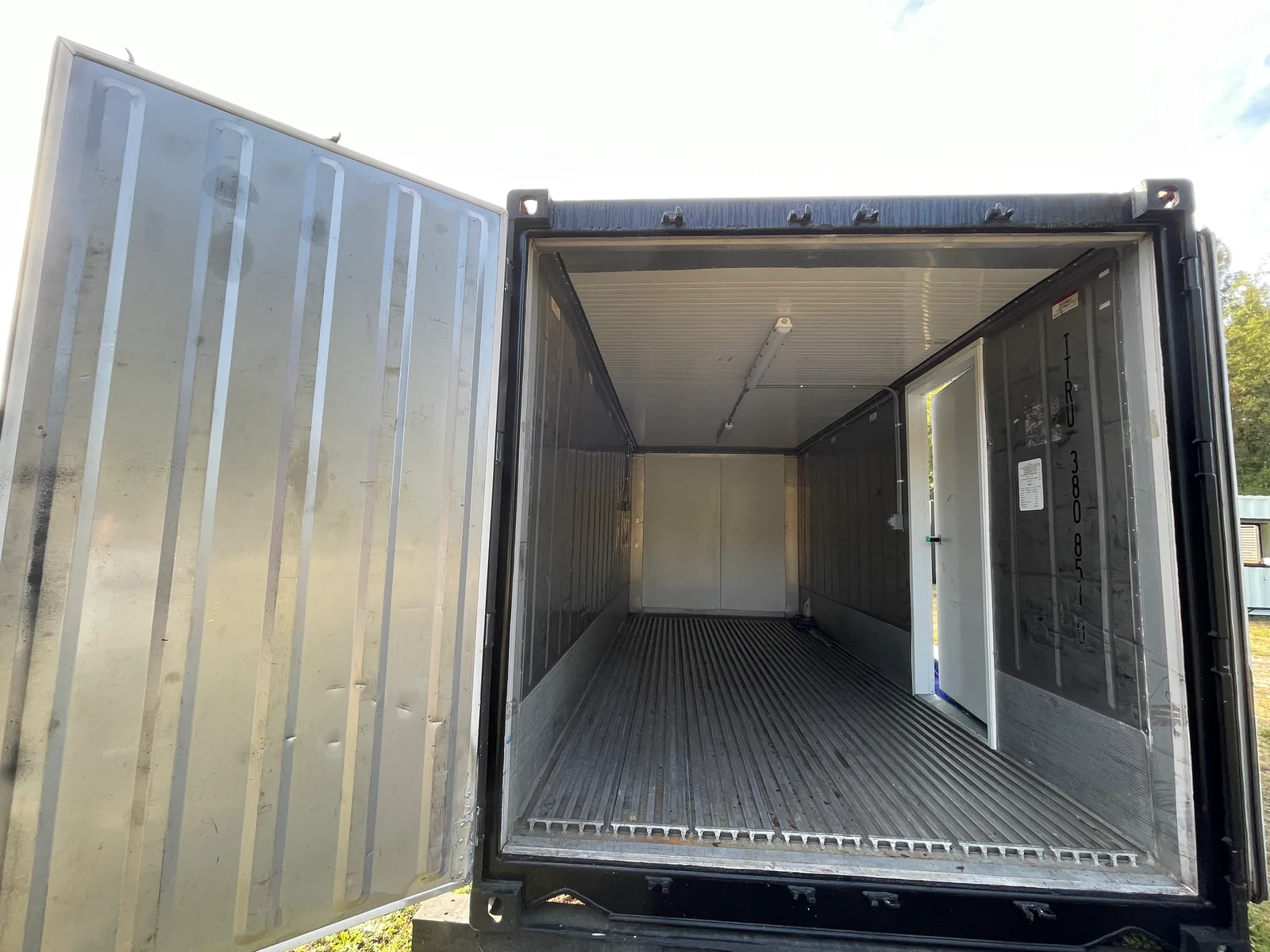
Choose the agricultural use before the shell
Write a clear description of what will happen inside. Will you store tools, protect equipment, stage supplies or grow a crop under controlled conditions? Include the people, equipment and materials involved. Separating those activities helps avoid buying an ordinary storage container for a task that needs a substantially different environment.
Tell the supplier if the proposal involves food, sensitive materials, occupied work areas or specific temperature requirements. A wind-and-watertight storage description does not establish that an interior is food-safe, climate-controlled or suitable for a particular process. Discuss the intended use and the materials before deciding on a starting unit.
Treat indoor growing as a complete system
UF/IFAS has studied growing lettuce hydroponically in a container-based agricultural pod in Citra. Its description includes HVAC, lighting, water pumping and dehumidification. That example illustrates how much more is involved than enclosing plants inside a steel box; it is research by UF/IFAS, not a Florida Container customer project.
Start with the crop and the growing method, then obtain a system design from qualified agricultural and building specialists. Ask them to define the environmental targets, equipment arrangement, maintenance needs and monitoring. Do not select lights, cooling and irrigation independently and assume they will work well together once installed.
Plan utilities and operating costs
Confirm the power and water available at the site before settling on equipment. Allow space for the people who will clean, maintain and replace components. Think through where water enters, how it is used and how drainage or wastewater will be handled. Have the relevant utility and project professionals review the planned connections.
UF/IFAS identifies energy use and operating expense as significant challenges for controlled-environment agriculture. Ask for an operating-cost estimate based on the proposed equipment, local utility rates and actual production plan. Avoid relying on a generic claim that container growing is automatically low-cost, profitable or environmentally superior in every situation.
Design for humidity, hygiene and workflow
Growing plants introduces moisture into an enclosed space. Virginia Tech Extension explains that humidity management is an important part of controlled-environment production and that crop requirements vary. Ask the system designer how temperature, airflow and moisture will be monitored and managed for the specific crop.
Lay out the work sequence from incoming supplies through production, cleaning and removal of finished goods or waste. Identify surfaces that must be cleaned, places where water may collect and the routes people will use while equipment is operating. If food handling is involved, determine the applicable food-safety and facility requirements before specifying finishes.
Prepare a realistic project brief
Include the location, intended crop or storage use, equipment list, available utilities and access photographs. State which parts of the project you expect Florida Container to provide: the shell, doors, insulation, fabrication or other agreed modifications. Separately identify the specialist growing systems and professional services that must be supplied or reviewed.
Confirm local land-use and installation requirements for the actual project. Then develop a budget that includes the container, transport, preparation, systems, approvals where applicable and ongoing operation. A staged feasibility review is especially useful when the agricultural process is new to your business.
- Define the crop, process or storage contents.
- Establish utility availability and environmental requirements.
- Plan cleaning, drainage, worker movement and maintenance.
- Separate container fabrication from growing-system design.
- Evaluate operating costs before committing to the build.
A few things worth knowing
Can I use an ordinary storage container as a growing room?
A growing room requires a design suited to the crop and process. Discuss the enclosure, systems, materials and utilities with qualified specialists before purchasing equipment.
Does a refrigerated container include a complete agriculture system?
No. Insulation or refrigeration is one component. Suitability depends on the unit’s condition and the requirements for lighting, water, humidity, workflow and the intended crop.