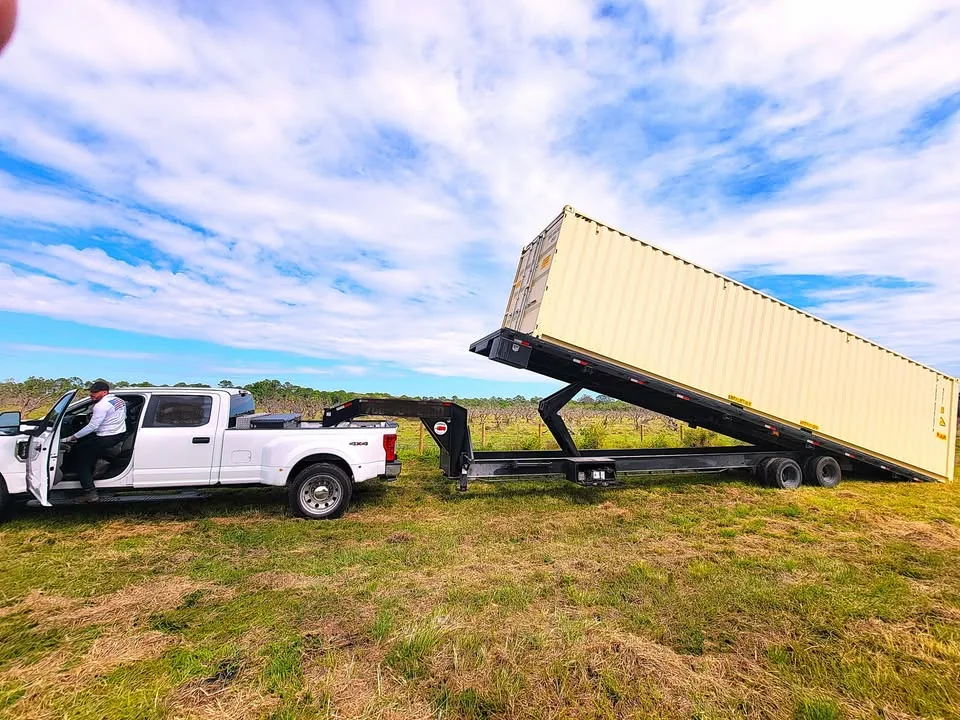
Confirm the address and intended use
Start with the exact delivery address and ZIP code, then explain whether the container will be used for storage, a site office or a future conversion. Ask the relevant local authority about placement and approval requirements for that use. A container purchase does not, by itself, establish that the proposed location or use is allowed.
Provide a contact who can answer access questions and be available during the delivery appointment. If the property is inside a gated community, active construction site or managed commercial facility, arrange entry and explain any delivery restrictions before scheduling.
Photograph the whole approach
Photograph the access from the public road through to the proposed placement area. Include the entrance, gates, tight turns, slopes and the final unloading position. Show nearby structures, fences, trees and overhead obstructions. If a driver will need to reverse, capture that route as well.
Measure the actual clear opening of a gate, including anything that narrows it. Do not assume a container that fits through the opening means the delivery vehicle will fit. Turning, overhead clearance and unloading space must be assessed for the specific equipment. Ask Florida Container to confirm the route with its delivery provider rather than relying on a generic clearance figure.
Review ground conditions and support
Explain what the truck and container will sit on: pavement, gravel, soil or another prepared surface. Mention soft areas, recent rain, drainage concerns, buried services and any features that may not be visible in a photo. Ground that looks firm from a distance may need closer assessment before a loaded vehicle crosses it.
Agree on preparation and support responsibilities with the delivery provider and, when needed, a qualified site professional. Ask who supplies any required foundation or support system and whether it must be ready before arrival. A suitable, level placement arrangement helps preserve intended door operation and usability, but the right design depends on the unit, site and use.
Decide where the doors should face
Mark the proposed location and state the required cargo-door direction. Think about how goods will reach the doors, where people will stand while opening them and whether future equipment will block access. Side-door and double-door containers need clearance at every opening you plan to use.
For an office or home project, coordinate the placement plan with entry steps, accessible routes where applicable, utilities and the approved site design. Those details are easier to reconcile before a heavy unit is set in place. If the intended position changes, ask the delivery team to review the revised arrangement.
Use a short delivery-day checklist
Confirm the appointment, access contact, quoted unloading method and any weather-related rescheduling procedure. Clear the route of parked vehicles, stored materials and bystanders. Follow the driver’s directions and stay outside the working area while equipment is moving. Do not attempt to guide, support or reposition a container by hand.
After placement, review the unit from a safe position with the driver or company contact. Compare it with the agreed specification, photograph its condition and raise concerns promptly. Keep the delivery record with your quote and any project documentation.
- Exact address, gate instructions and an available site contact.
- Photos and measurements reviewed for the assigned truck.
- Prepared placement area and agreed support responsibilities.
- Door direction and surrounding access confirmed.
- Delivery scope and any additional service charges understood.
A few things worth knowing
How much clear space does delivery require?
It depends on the container, truck, unloading method and approach. Request dimensions from the assigned delivery provider and have the actual route reviewed.
Can the driver place a container anywhere on my property?
Placement depends on access, ground conditions, the equipment and the agreed scope. Discuss the exact location before scheduling; additional handling may require separate arrangements.